
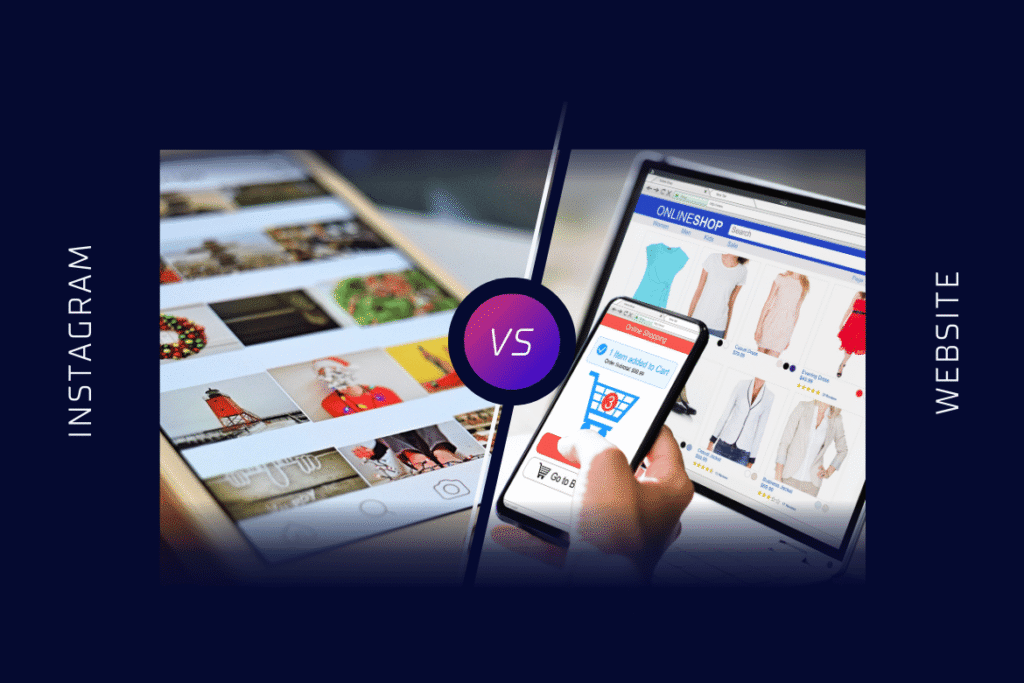
Do You Need a Website If Your Instagram Business Is Doing Well?
I know your Instagram is buzzing day and night — or I believe it will be soon if it isn’t yet. Customers’ DMs, likes, and comments are flowing. You’re making sales, building followers, and people are talking about your brand. It feels amazing… until one day your account disappears. Suspended. Hacked. Or an algorithm update suddenly makes your posts invisible. Just like that, all your hard work and traffic could vanish overnight.
So the question naturally arises: do you need a website if your Instagram business is already doing well? The honest answer is not always immediately — but sooner than you think. Instagram is powerful for visibility and early sales, but it doesn’t give you ownership, long-term stability, or full control over your brand. Whether a website is necessary right now depends on your business stage, growth plans, and tolerance for platform risk.
In this article, I’ll break it down with clarity and honesty — when a website becomes essential, why it matters, and the few cases where Instagram alone can still work for now. By the end, you’ll have a clear framework to decide confidently.
What Business / Branding Features Does Instagram Offer
As we’re in search of a clear answer to this query, whether my brand really does need a website, we will first briefly overview the features that Instagram offers that directly help in your business:
1. Profile and Business Features:
As you know, Instagram allows your businesses to set up a professional profile. You can categorize your business (e.g., retail, education, consultancy) so people know what you do in a few clicks. The bio lets you quickly describe your brand, add links to your website, and use branded hashtags. Your username is a unique identifier for easy discovery, and profile pictures, highlights, and story covers give instant visual branding that reflects your business identity.
2. Content Sharing & Engagement
Instagram lets your businesses showcase content in several ways:
- Feed Posts: Images or videos for storytelling, product highlights, and updates.
- Reels: Short videos for broad reach and brand exposure.
- Stories: 24-hour content for polls, behind-the-scenes, or limited offers.
- IGTV / Long Videos: Tutorials, interviews, or educational content.
- Live Streaming: Real-time Q&A, demos, or interactive events.
3. Communication Features
Instagram offers you DMs, story replies, polls, and questions — all tools for direct customer interaction. They help answer queries, build relationships, and foster loyalty, often turning followers into buyers.
4. Discovery and Reach
Your business can get discovered beyond your followers. Hashtags, geotags, the Explore page, suggested accounts, and Reels help you reach new customers organically. We can use these to attract the right audience without spending a dime.
5. E-Commerce and Conversion Tools
Your business can sell directly on Instagram. With Shopping, product tags, catalogs, and even in-app checkout (where available), we can make it easy for customers to buy. Paid promotions and ads help target the right people, and Instagram shows engagement and clicks to track results.
6. Analytics and Insights
Your business needs data, and Instagram gives you follower info, engagement metrics, reach, and impressions. We can see what’s working, refine our posts, and make smarter decisions.
7. Community and Trust Features
Your business builds trust through Highlights, verified badges, and sharing customer content. We can showcase testimonials, reviews, and social proof to strengthen credibility and community.
Instagram Limitations That Can Affect Long‑Term Business Growth
Now we need to look at what Instagram cannot do for your business, especially for long-term trust and growth, and why a website gives you absolute ownership, security, and growth power that Instagram alone can’t match. And how it directly impacts your business and brand name.
1. You Don’t Own Instagram — They Do:
Believe it or not, but your business or brands with ‘X’ thousands of followers, ‘X’ thousands of viewers, ‘X’ hundreds of comments, likes, DMs, you do not own them. You don’t own your Instagram account. The platform owns the account and all your content. They can change rules, disable features, or even ban your account if something triggers their automated systems — sometimes without warning or clear reason. If that happens, you lose your audience, your content, and your traffic instantly, with no backup system in place. That’s like building your entire shop on rented land — and one day, the landlord can evict you.
Instagram removed RM’s Business Accounts:
RM, a young entrepreneur in London, had both his personal and business Instagram accounts deleted overnight with no warning and no right of appeal. His company — built through those accounts — lost thousands of followers and vital customer contacts, showing how fragile an Instagram‑only presence can be for a growing brand. You can read the full story on the Guardian.
2. Algorithm Dependence — Instagram Decides Your Reach
Your business’s visibility on Instagram depends on an algorithm that is constantly changing. Even if your content is excellent, a tweak in the system can suddenly push your posts lower, reduce reach, or prioritize other content types. This means your traffic and engagement can fluctuate unpredictably — a significant risk to long-term business growth and credibility if your business is dependent on Instagram and lacks a professional website.
Instagram Admits Algorithm Controls Your Reach:
Instagram doesn’t deliver your content to everyone who follows you — visibility is governed by an algorithm that predicts which posts are most relevant to each user. As Instagram head Adam Mosseri explained, reach and recommendations depend on how the system interprets engagement signals, meaning even high‑quality content may not appear widely unless it matches what the algorithm favors. This shows your business’s reach is never entirely in your control.
Learn more about how Instagram’s algorithm determines reach.
3. Your Business Is Vulnerable Without a Backup: Maybe Instagram Isn’t Enough
Your business content, followers, and hard-earned engagement are entirely at Instagram’s mercy. If your account is hacked, suspended, or deleted, there’s no proper backup, and recovering lost followers or content is often slow, frustrating, or impossible. Businesses have lost thousands of followers and even revenue overnight because they relied entirely on a social platform without owning their data.
Read more about account suspension struggles and user complaints.
4. Limited Discoverability Outside the Platform (No Real SEO)
Instagram visibility is mainly inside the app. People searching on Google for a solution, product, or service won’t land on your Instagram posts unless you also have a website — because search engines primarily rank websites, not social media posts. This means your business misses out on a massive audience of people who use Google before choosing a brand.
Google and other search engines don’t give the same ranking power to Instagram posts as they do to websites — they index and rank webpages far more effectively. At the same time, social media content has minimal influence on SERP rankings (Search Engine Results Page, i.e., the page Google shows when someone searches; higher ranking means more visibility and clicks).
Learn why search engines prioritize websites over social media content.
5. Very Limited Lead Capture & Automation
Your business can get messages in DMs, replies on stories, or comments, and that’s nice for casual interaction. But here’s the problem: Instagram doesn’t let you capture leads properly, organize them, or automate follow-ups.
You can’t systematically collect emails, segment interested people, or send automatic messages over time. DMs are one-off conversations, which means your business relies entirely on manual replies and chance rather than on a structured system that grows over time.
- Lead Capture: collecting contact info from people interested in your business.
- Automation: sending messages automatically without manually typing each one.
- Segmentation: organizing your audience into groups based on interest or behavior.
Read why social media alone isn’t enough to generate reliable leads.
6. Limited Professional Conversion & E‑Commerce Tools
Instagram’s shopping features can help your business showcase products and even make sales directly within the app. And yes, for small or simple operations, it might feel enough. But here’s the truth: Instagram isn’t built to give your business complete control over professional sales and conversions.
Your business can’t easily:
- Offer bundled products or special offers in a structured way.
- Run upsells or cross-sells that increase average order value.
- Provide advanced payment options or custom checkout experiences.
- Create detailed product pages with rich descriptions, specs, reviews, and SEO-friendly content.
- Track customer behavior through the entire purchase journey.
Instead, Instagram relies on in-app features or third-party tools that you don’t fully own or control. One day, policies, technical issues, or restrictions could limit your options, affect sales, or even block certain features. For a growing business, this means Instagram alone can’t support professional-level e-commerce and conversions — and every serious brand eventually runs into these limits.
Learn why professional e-commerce needs more than Instagram.
7. Branding & Authority Limitations
Imagine walking into two stores: one is beautifully designed, every detail thought through, with your brand’s colors, logo, and story everywhere. The other is a pop-up in a busy street — looks nice, but it’s temporary, and anyone could set it up tomorrow. Which one would you trust more?
That’s the reality for your business on Instagram. Your profile can only look like everyone else’s — limited layouts, fonts, and colors. Posts disappear, stories vanish, and your brand’s identity is buried under everyone else’s feed. Instagram is social, fun, and casual — not built to showcase your authority or make your business look professional.
Customers are naturally skeptical of businesses that exist only on social media. They want proof that your brand is real, stable, and credible. Research backs this up: firms with a website are seen as more trustworthy than those with only an Instagram profile. Without a website, your business risks looking like that temporary pop-up — exciting at first, but not entirely credible.
8. Advanced Analytics & Customer Journey Tracking
Instagram gives you likes, reach, and engagement — and yes, that feels good. You can see which posts get attention, who’s commenting, and how many people are watching your stories. But here’s the catch: Instagram doesn’t show your customers’ whole journey.
You can’t easily track what happens from the first time someone discovers your business to when they buy something. There’s no way to run proper A/B tests, measure conversions in detail, retarget visitors with pixels, or analyze behavior deeply. All you get are basic engagement numbers, which tell a story — but only part of the story.
Instagram analytics is like watching the tip of the iceberg. You see some activity, but most of what really matters about your customers stays hidden.
See why social media analytics alone can’t track your whole customer journey.
Why Your Business Needs a Website Even If Instagram is Doing Well
Even if Instagram is buzzing, your business is still partly renting space in someone else’s world. Likes, comments, and followers are great — but you don’t fully own them. A website gives you complete control, credibility, and tools Instagram can’t — from owning your audience to running professional e-commerce experiences.
Customers are naturally skeptical of businesses that exist only on social media. In fact, multiple surveys show that about 84% of consumers consider a business more credible if it has a professional website, and 75% judge credibility based on how the site looks — far more than they trust social profiles alone.
See the latest data on how websites influence consumer trust.
In this section, we’ll explore the key features a website provides that Instagram alone can’t match — the real reasons your business benefits from having a website.
1. Take Full Control of Your Brand
Think of a website like owning your own shop on a street you own. You control the doors, the shelves, and the customers who visit. Instagram can change rules, suspend accounts, or ban features anytime — but your website? Entirely yours, always.
2. Be Found by Customers Anytime, Anywhere
With a website, your business shows up when people actively search for your products or services on Google. Unlike Instagram, which only reaches followers or social audiences, your website opens doors to an entirely new world of potential customers — those looking for you before they even know you exist.
Search engines rank websites far higher than social media for product and service searches.
3. Build Lasting Connections Automatically
A website lets you collect emails, organize your audience, and automate follow-ups. No more relying on DMs or story replies that get lost in the feed. Think of it as an intelligent assistant that remembers every customer, nurtures relationships, and consistently grows your sales.
4. Create a Store That Works for You
Selling on Instagram is like running a small stall at a busy market — it works, but you’re limited by space, rules, and how much you can display. A website, on the other hand, is your own full-fledged store: you decide the layout, showcase products exactly how you want, and offer bundles, upsells, and special deals without restrictions. Customers can explore detailed product pages, choose flexible payment options, and enjoy a smooth, professional checkout experience.
Learn how websites expand e‑commerce and lead generation capabilities.
5. Showcase Your Brand Exactly How You Want
Your website is like your own flagship store, where every detail — colors, fonts, layout, and messaging — perfectly reflects your brand identity. Unlike Instagram, where your profile looks like everyone else’s, a website gives you complete creative control to tell your story, highlight your values, and make a lasting impression.
Customers instantly recognize your professionalism and credibility. It’s the difference between a temporary pop-up stall and a carefully designed store that feels honest, stable, and trustworthy — the kind of place people want to buy from and remember.
6. Understand Your Customers from Start to Finish
Instagram shows likes and comments — useful for surface-level engagement, but it only scratches the surface. A website lets you see the whole customer journey: who visits, what pages they explore, what drives them to buy, and where they drop off. You can test layouts, track conversions, and retarget interested visitors — giving you a complete blueprint of your business.
Think of it like having a map of your entire store, not just watching people glance at the window. With this insight, every decision is data-driven, helping your business grow smarter and faster.
Rare Cases When You Don’t Need a Website (Yet)
Now, let me be honest with you. Yes, a website is powerful. Yes, it protects and scales your business. And it is a must-have business asset for companies. But no, not every Instagram business needs a website immediately. There are rare, early-stage scenarios where Instagram alone can be enough — for now. Think of this like learning to drive. You don’t buy a luxury car on day one. First, you learn the road.
1. You’re Just Testing an Idea (Not a Real Business Yet)
If you’re still experimenting — figuring out what to sell, who your customer is, or whether people will even pay — Instagram is a great testing ground.
Example:
You just started selling homemade desserts, digital templates, or offering a small service. You’re posting, getting DMs, maybe a few orders here and there. At this stage:
- Your goal is validation, not scale
- You’re learning what people ask, what they complain about, and what sells
- A website might actually slow you down or distract you.
In this phase, Instagram is like a notebook — quick, flexible, low-pressure. But the moment sales become consistent, the “testing phase” is over.
2. You’re a Solo Service Provider With Limited Capacity
If you are the product — and you can only handle a small number of clients — Instagram may be enough temporarily.
Example:
- A personal tutor
- A freelancer just starting.
- A consultant working with 3–5 clients at a time
If:
- All leads come through DMs
- You personally talk to every client.
- You’re not trying to scale or automate yet.
Then yes — a website isn’t urgent right now. But here’s the quiet truth: The moment you get tired of repeating yourself in DMs… you’ll feel the pain. That’s usually when people realize they’ve outgrown Instagram.
3. You’re Intentionally Staying Small (And That’s Okay)
Not everyone wants to build an empire — and that’s perfectly fine.
If:
- You’re happy with a modest income
- You don’t want automation, ads, or scaling.
- Instagram income is “side money,” not a serious source of income.
Then forcing a website doesn’t make sense. But be clear with yourself: Am I choosing to stay small — or am I afraid to grow? That question changes everything.
4. Your Business Is Extremely Local & Relationship-Based
Some businesses grow purely on local trust.
Example:
- A local tailor
- A neighborhood gym
- A home-based food seller known in the community
If:
- Most customers already know you
- Orders come through WhatsApp or DMs
- Growth is intentional but slow
Instagram can work as a digital notice board. But even here, a website eventually becomes your proof of legitimacy, especially for new customers who don’t know you personally.
The Honest Bottom Line
Instagram can start your business. But it was never designed to hold your business long-term. If your brand:
- Is growing
- Is making consistent money
- Has a future vision
- Cares about trust, safety, and stability
Then a website isn’t an expense. It’s insurance, authority, and ownership. And if you’re not there yet — that’s okay. Just make sure Instagram is a stepping stone, not the ground you build your entire house on.
So, Do You Actually Need a Website — Right Now or Soon?
After everything we’ve discussed, here’s the most honest answer: You may not need a website today. But in today’s digital world, you will need one — sooner than you think.
When Instagram Alone Is Enough (Early or Pre-Revenue Stage)
If your business is still in the early, pre-revenue stage — testing offers, learning what works, and making your first few sales — Instagram alone can genuinely be enough for now. At this phase, speed matters more than structure. Conversations matter more than systems. Using Instagram to validate demand is practical and innovative.
You’re figuring things out. You’re learning what people ask, what they hesitate about, and what actually converts. In this phase, a website can sometimes slow you down or pull focus away from the real work: understanding your market. But this phase doesn’t last long — and it isn’t meant to.
The Point Where a Website Becomes a Business Necessity
The moment your business starts seeing consistency — even small consistency — your needs change. Customers keep asking the same questions repeatedly. Trust starts influencing buying decisions more than content. You feel the limits of DMs, manual replies, and scattered information. Growth doesn’t stop — it just becomes harder to manage cleanly.
That’s when a website naturally shifts from a “nice to have” to a necessary foundation. Not because Instagram fails — but because Instagram was never built to carry a business long-term on its own. In today’s environment, customers expect legitimacy. They Google brands before paying. They look for clarity, structure, and reassurance. A website quietly provides all of that without shouting for attention. It doesn’t replace Instagram — it supports it. Think of Instagram as where people discover you. A website is where they decide to trust you.
Why a Website Becomes Inevitable as Your Business Grows
And even if your business doesn’t need a website today, it will almost certainly need one tomorrow, or the day after — when revenue grows, when competition increases, or when trust becomes the deciding factor. The key isn’t rushing into a website too early. The key is not pretending you can avoid it forever.
Every serious business eventually reaches a point where:
- Ownership matters more than reach
- Issues of stability more than virality
- Issues of structure more than speed.
And at that point, having a website isn’t a marketing decision — it’s a business one. So if you’re not building one yet, that’s okay. Just make sure it’s a delay with awareness, not denial. Because in today’s digital world, a website isn’t optional forever — it’s simply inevitable.
Instagram Can Start Your Business — A Website Sustains It
Instagram is an incredible starting point. It helps you test ideas, build attention, talk to customers, and even make your first sales. For many businesses, it’s the spark that turns an idea into reality. But Instagram was never designed to be the foundation of a serious, long-term business.
As soon as your brand shows consistency — in sales, audience, or ambition — the risks of relying on a single platform become real. Algorithms change. Accounts get restricted. Trust becomes a deciding factor. Customers start Googling before buying. And suddenly, likes and DMs are no longer enough. That’s where a website quietly steps in — not to replace Instagram, but to complete it.
Build a Website When You Decide to Build Business That Lasts
A website gives you ownership when reach is uncertain, stability when platforms shift, and credibility when customers hesitate. It turns attention into trust, and trust into sustainable growth. So no, you may not need a website on day one.
But if you’re building something real, something meant to last, you will need one sooner than you think. The most innovative businesses don’t ask “Do I need a website?”
They ask, “When is the right time to build it?” And the honest answer is this: Instagram can help you start — but a website is what allows your business to stand on its own.
Visit our website for upcoming articles. You can also refer to our FAQs for answers to your most frequently asked questions. And can also contact us for a free consultation.